
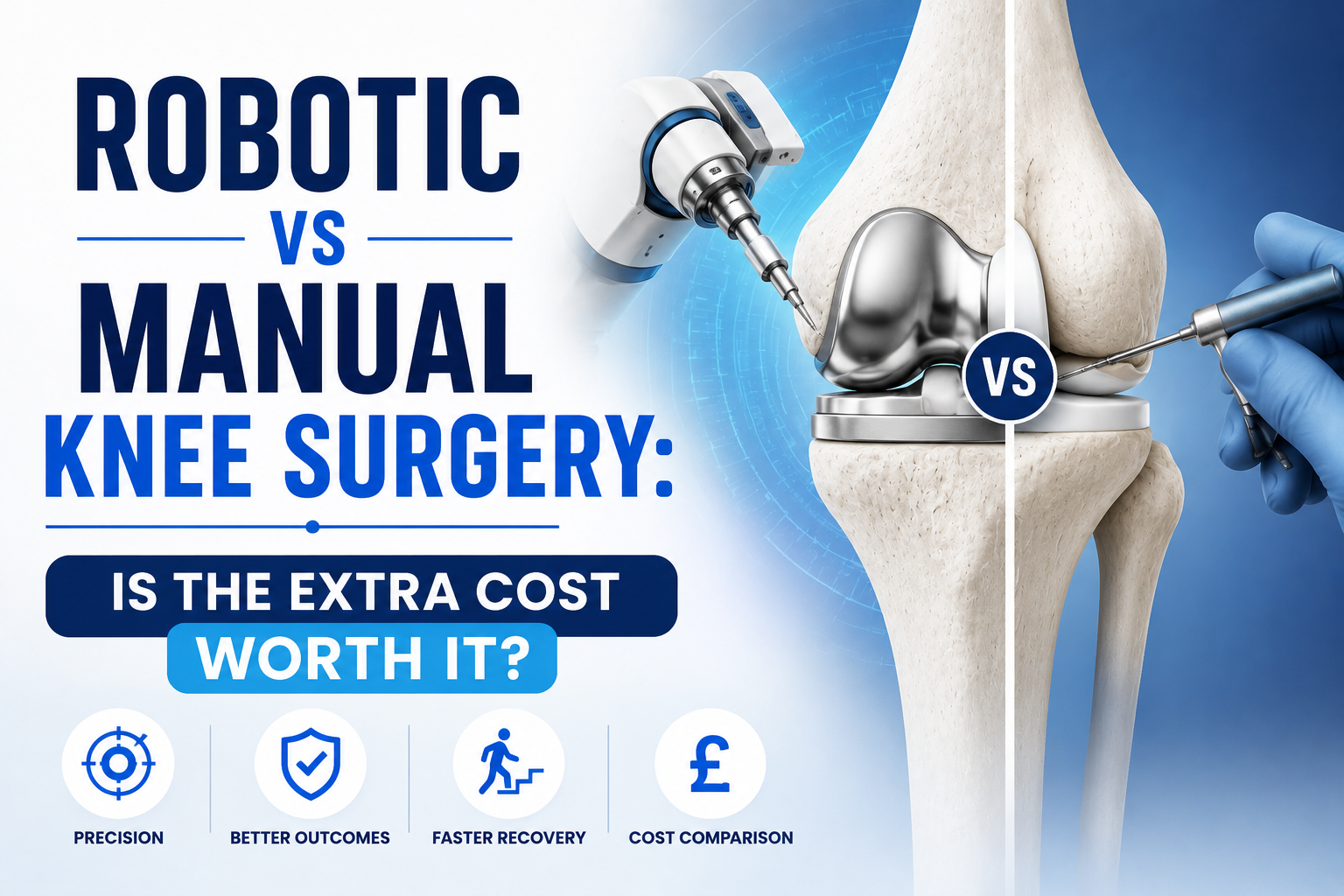
Knee pain caused by osteoarthritis, sports injuries, or age-related wear and tear can make everyday activities like walking, climbing stairs, or even standing uncomfortable. When non-surgical treatments such as physiotherapy, medications, or injections no longer provide relief, knee replacement surgery may be the best option to restore mobility and improve quality of life.

With advances in orthopaedic technology, many patients now have a choice between traditional manual knee replacement and Robotic Total knee replacement. While robotic-assisted surgery often comes with a higher price tag, many patients wonder whether the additional cost is justified.
At Nikhil Pradhan, patients visiting the knee replacement clinic in Cheshire receive personalised advice based on their condition, lifestyle, and treatment goals. Understanding the differences between robotic and manual knee surgery can help you make an informed decision about your care.
What Is Knee Replacement Surgery?
Knee replacement surgery involves replacing the damaged surfaces of the knee joint with artificial implants. The procedure is commonly recommended for patients with severe arthritis or knee damage that causes persistent pain and limits daily activities.
It may be advised for individuals experiencing:
- Advanced osteoarthritis
- Rheumatoid arthritis
- Post-traumatic arthritis
- Severe cartilage damage
- Chronic knee pain that does not improve with conservative treatment
Both manual and robotic-assisted techniques aim to relieve pain, improve mobility, and restore knee function.
What Is Manual Knee Replacement Surgery?
Manual knee replacement is the traditional surgical technique that has been successfully performed for decades. During the procedure, the surgeon uses specialised instruments and their clinical expertise to remove damaged bone and cartilage before positioning the artificial knee implant.
Benefits of Manual Knee Surgery
- Proven long-term success
- Effective pain relief
- Widely available
- Suitable for most patients
- Excellent outcomes when performed by an experienced surgeon
Modern manual knee replacement remains a highly reliable procedure with outstanding success rates.
What Is Robotic Total Knee Replacement?
Robotic Total knee replacement combines the expertise of the surgeon with advanced robotic technology. Before surgery, detailed imaging creates a three-dimensional model of the patient’s knee, allowing highly accurate surgical planning.
During the operation, the robotic system assists the surgeon by providing real-time guidance to improve precision while the surgeon remains in complete control throughout the procedure.
It is important to understand that the robot does not perform the surgery independently. Every decision and movement is directed by the surgeon.
Robotic vs Manual Knee Surgery: Key Differences
| Feature | Manual Knee Surgery | Robotic Total Knee Replacement |
| Surgical Planning | Standard measurements | Advanced 3D planning |
| Implant Positioning | Based on surgical expertise | Enhanced precision with robotic guidance |
| Accuracy | Excellent | Potentially greater precision |
| Technology | Traditional surgical instruments | Robotic-assisted system |
| Recovery | Good outcomes | May support faster early recovery for some patients |
| Cost | Generally lower | Typically higher |
Both procedures are highly effective when performed by an experienced orthopaedic surgeon.
Is Robotic Knee Surgery More Accurate?
One of the biggest advantages of Robotic Total knee replacement is improved surgical precision.
The robotic system helps the surgeon:
- Plan implant placement before surgery
- Make highly accurate bone cuts
- Preserve healthy bone whenever possible
- Improve alignment of the artificial joint
- Maintain soft tissue balance
Accurate implant positioning may contribute to improved knee function and patient satisfaction over the long term.
Is the Extra Cost Worth It?
This is one of the most common questions patients ask before surgery.
The answer depends on several factors, including your age, activity level, knee anatomy, and personal expectations.
The additional cost of robotic surgery often reflects:
- Advanced imaging technology
- Robotic equipment
- Enhanced surgical planning
- Specialised operating systems
For some patients, these benefits may justify the higher cost, particularly if improved implant positioning and personalised surgical planning are priorities.
However, it is important to remember that traditional manual knee replacement also delivers excellent long-term outcomes for many patients. A successful result depends not only on the technology used but also on the surgeon’s expertise, careful patient selection, and commitment to rehabilitation.
Recovery After Knee Replacement Surgery
Recovery following either manual or robotic knee replacement varies from patient to patient.
Most individuals can expect:
- Walking with assistance within one day
- Physiotherapy beginning shortly after surgery
- Gradual return to daily activities over several weeks
- Continued improvement for several months
Some studies suggest that patients undergoing Robotic Total knee replacement may experience less early discomfort and regain function slightly faster. However, long-term recovery largely depends on following your rehabilitation programme and maintaining a healthy lifestyle.
When Is Knee Arthroscopy Recommended Instead?

Not every patient with knee pain requires a knee replacement. In many cases, especially when joint damage is less advanced, a knee arthroscopy surgeon may recommend arthroscopic surgery.
Knee arthroscopy is a minimally invasive procedure used to diagnose and treat conditions such as:
- Meniscus tears
- Cartilage injuries
- Loose bone fragments
- Ligament injuries
- Persistent knee locking
By using small incisions and a tiny camera, arthroscopy allows the surgeon to treat certain knee problems while preserving the natural joint. Your surgeon will determine whether arthroscopy or knee replacement is the most appropriate treatment based on the extent of joint damage.
Why Choose Nikhil Pradhan’s Knee Replacement Clinic in Cheshire?
Choosing the right surgeon is just as important as choosing the surgical technique.
At Cheshire Hip and Knee Clinic, patients receive comprehensive assessment and personalised treatment plans tailored to their individual needs.
The knee replacement clinic in Cheshire offers:
- Comprehensive orthopaedic evaluation
- Advanced diagnostic imaging
- Personalised treatment recommendations
- Expertise in both manual and robotic-assisted knee surgery
- Modern surgical techniques
- Structured rehabilitation programmes
- Ongoing follow-up care
Every treatment decision is based on achieving the safest procedure, the best possible functional outcome, and long-term patient satisfaction.
Conclusion
Both manual knee replacement and Robotic Total knee replacement are effective solutions for relieving chronic knee pain and restoring mobility. While robotic-assisted surgery offers advanced planning and greater surgical precision, traditional manual techniques continue to provide excellent long-term results when performed by an experienced orthopaedic specialist.
The decision should not be based on technology alone. Factors such as your age, bone health, lifestyle, severity of arthritis, and overall medical condition all play an important role in determining the most appropriate treatment.
If you are considering surgery, consulting an experienced specialist at a trusted knee replacement clinic in Cheshire can help you understand your options and choose the treatment that best suits your needs.
At Cheshire Hip and Knee Clinic, patients benefit from evidence-based care, advanced surgical expertise, and personalised treatment plans designed to restore mobility, reduce pain, and improve long-term quality of life.
Frequently Asked Questions (FAQs)
1. Is robotic knee replacement better than manual knee replacement?
Both procedures are highly effective. Robotic Total knee replacement offers enhanced precision and personalised surgical planning, while manual knee replacement has a long history of excellent outcomes. The best option depends on your individual condition.
2. Does robotic knee replacement reduce recovery time?
Some patients may experience quicker early recovery and improved comfort after robotic-assisted surgery. However, recovery also depends on rehabilitation, overall health, and adherence to your physiotherapy programme.
3. Is robotic knee surgery worth the additional cost?
For some patients, the improved precision and customised planning may justify the higher cost. Your surgeon can advise whether these benefits are likely to make a meaningful difference in your specific case.
4. When should I see a knee arthroscopy surgeon instead of having a knee replacement?
If your knee pain is caused by conditions such as a meniscus tear, cartilage injury, or ligament damage rather than advanced arthritis, a knee arthroscopy surgeon may recommend minimally invasive arthroscopic treatment instead of joint replacement.
5. How do I choose the right knee replacement clinic in Cheshire?
Look for a clinic with experienced orthopaedic specialists, access to modern surgical techniques, personalised treatment plans, comprehensive rehabilitation services, and a strong focus on patient outcomes. At Cheshire Hip and Knee Clinic, patients receive expert care tailored to their individual needs.