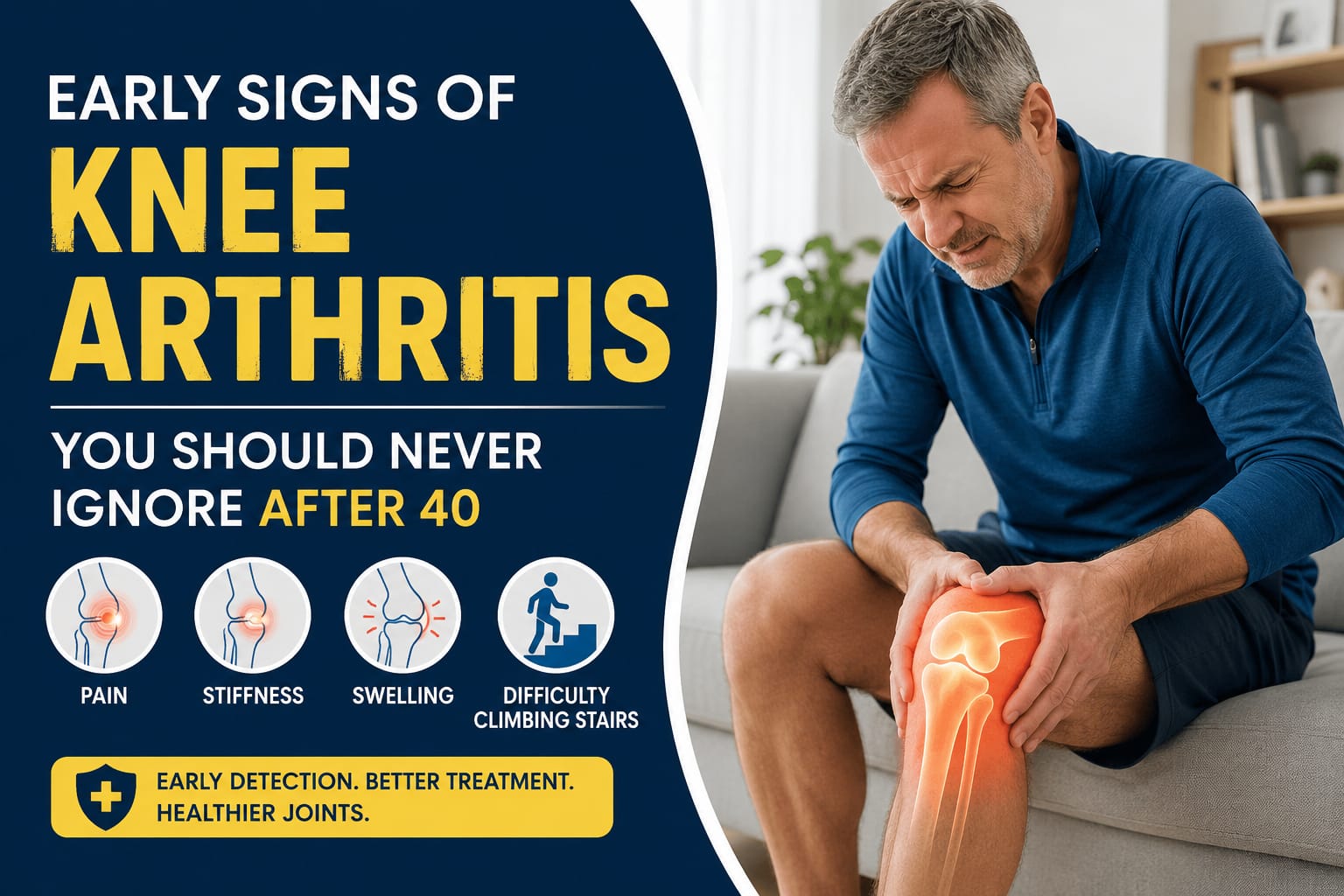
Many people assume knee pain is just a normal part of getting older. A little stiffness in the morning, discomfort while climbing stairs, or aching knees after a long day often gets ignored. But after the age of 40, these small changes can sometimes be the early warning signs of Knee Arthritis.
The truth is, arthritis does not appear overnight. It develops gradually, and the earlier it is identified, the better the chances of managing symptoms and protecting the joint from further damage.
Understanding these warning signs can help you seek treatment before knee pain starts affecting your daily life.
What is Knee Arthritis? 
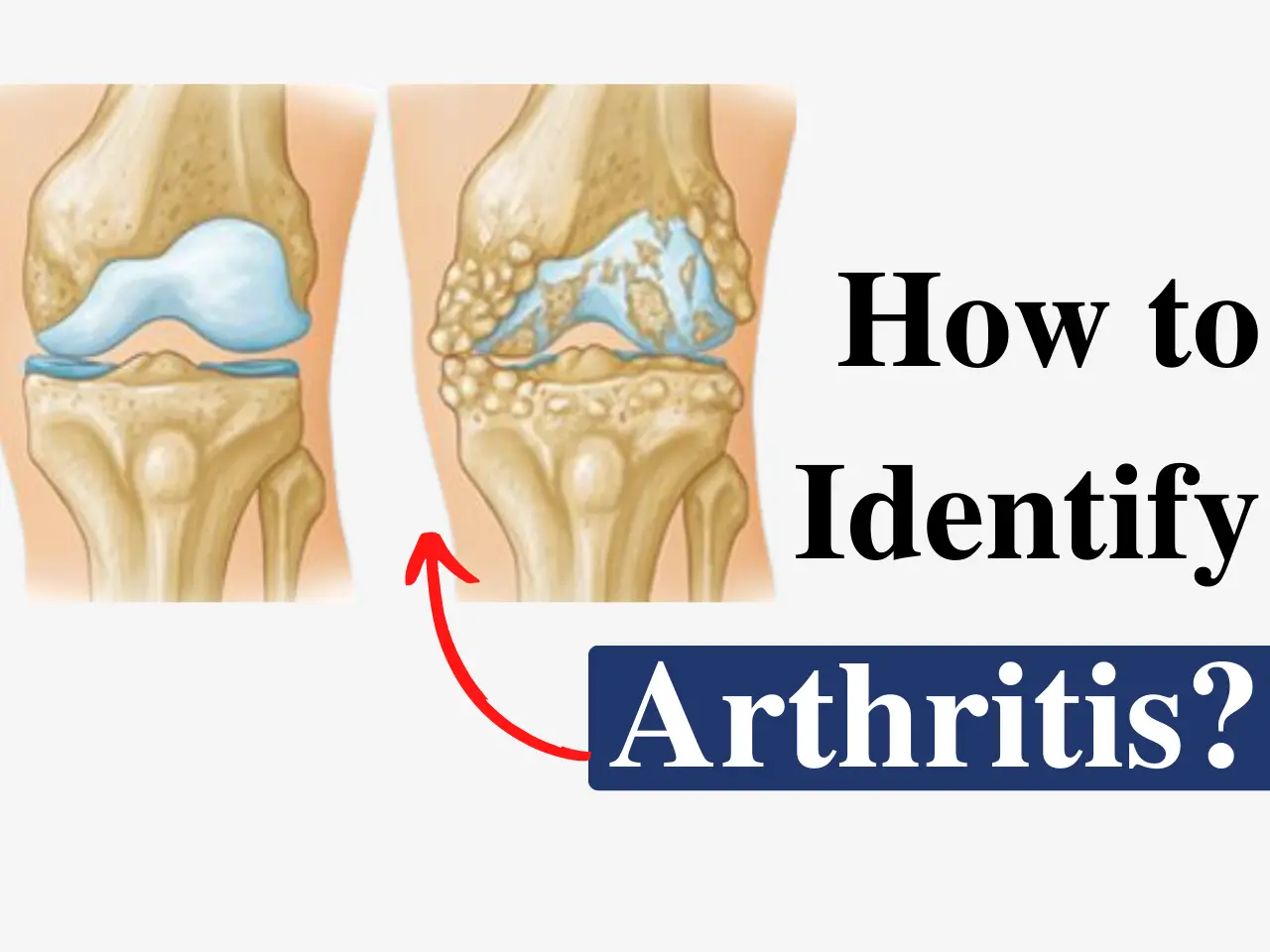
Knee Arthritis is a condition where the smooth cartilage inside the knee joint slowly wears down over time. Cartilage normally acts like a cushion between the bones. When it becomes damaged, movement becomes less smooth and more painful.
As the condition progresses, people may experience:
- Pain during movement
- Swelling around the knee
- Joint stiffness
- Difficulty walking
- Reduced flexibility
Osteoarthritis is the most common type seen in adults over 40, especially in people with previous injuries, excess weight, or long-term stress on the knees.
Early Signs of Knee Arthritis After 40
- Knee Pain That Keeps Coming Back
One of the earliest signs of Knee Arthritis is pain that repeatedly returns. At first, the discomfort may only happen after:
- Long walks
- Climbing stairs
- Exercise
- Standing for extended periods
Many people ignore this stage because the pain improves with rest. However, recurring pain is often the body’s first signal that the knee joint is changing.
- Morning Stiffness in the Knee
If your knees feel tight or stiff after waking up, it may be more than simple fatigue.
People with early Knee Arthritis commonly notice:
- Difficulty straightening the knee
- Stiffness after sitting for long periods
- Slower movement in the morning
This stiffness usually improves gradually as the joint starts moving.
- Swelling Around the Joint
Inflammation inside the knee can cause visible swelling or a feeling of fullness around the joint.
Sometimes the swelling is mild and comes and goes. In other cases, the knee may feel warm, tender, or heavy after activity.
Persistent swelling should never be ignored, especially when combined with pain or stiffness.
- Cracking or Grinding Sounds
Do your knees make clicking or grinding sounds while walking or bending?
This symptom, known as crepitus, can happen when the cartilage surface becomes rough due to arthritis changes.
Occasional clicking without pain may not be serious, but repeated grinding sounds along with discomfort can indicate early joint wear.
- Difficulty Climbing Stairs
Stair climbing puts extra pressure on the knees. This is why many people first notice arthritis symptoms while:
- Going upstairs
- Coming downstairs
- Squatting
- Getting up from chairs
If these movements are becoming painful or difficult, it may be time for a professional knee assessment.
- Reduced Knee Flexibility
Early Knee Arthritis can slowly reduce the knee’s range of motion.
You may notice:
- Difficulty fully bending the knee
- Trouble sitting cross-legged
- Tightness during movement
- Feeling like the knee is “stuck”
These symptoms often become more noticeable over time if left untreated.
- Knee Weakness or Instability
Some patients describe the sensation as the knee “giving way” unexpectedly.
As arthritis affects the joint, the surrounding muscles can weaken, leading to reduced balance and stability. This can increase the risk of falls and injuries.
Why Knee Arthritis Becomes More Common After 40?
Several factors increase the risk of developing Knee Arthritis after 40:
- Age-related cartilage wear
- Previous sports injuries
- Excess body weight
- Sedentary lifestyle
- Family history of arthritis
- Repetitive stress on the knees
- Ligament or meniscus injuries
Even people who have been physically active throughout life may develop symptoms later due to gradual joint wear.
When Should You See a Specialist?
You should not ignore knee symptoms that continue for weeks or interfere with everyday activities.
A consultation is important if you experience:
- Ongoing knee pain
- Swelling that keeps returning
- Difficulty walking
- Stiffness affecting mobility
- Knee locking or instability
An orthopaedic specialist can diagnose the problem using clinical examination and imaging such as X-rays or MRI scans.
Treatment Options for Knee Arthritis
Treatment depends on the severity of arthritis and how much it affects your lifestyle.
Non-Surgical Treatments
Many patients improve with conservative treatment options such as:
- Physiotherapy
- Weight management
- Anti-inflammatory medication
- Activity modification
- Knee strengthening exercises
- Joint injections
Early treatment often helps delay progression and improves daily comfort.
Knee Arthroscopy Surgery in Cheshire
In some patients, knee pain may also involve cartilage damage or meniscus tears along with arthritis changes.
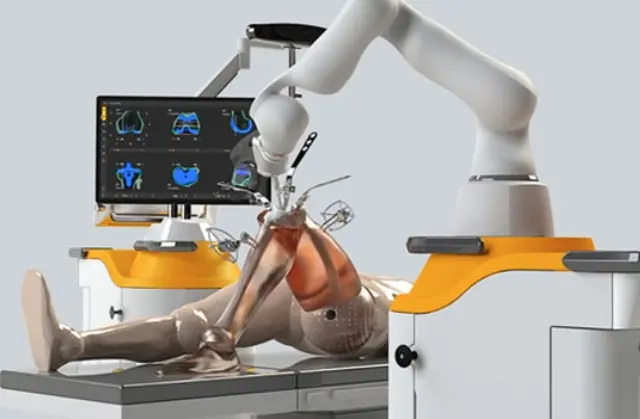
In these cases, Knee arthroscopy surgery in Cheshire may be recommended to assess and treat certain internal knee problems using minimally invasive techniques.
A skilled knee arthroscopy surgeon in Cheshire can determine whether arthroscopy is suitable based on the condition of the joint and the patient’s symptoms.
Arthroscopic procedures are commonly associated with:
- Smaller incisions
- Faster recovery
- Less post-operative discomfort
- Improved knee function in selected patients
Can Knee Arthritis Be Prevented?
Although arthritis cannot always be completely prevented, certain habits may help protect the knee joints:
- Maintain a healthy body weight
- Stay physically active
- Strengthen leg muscles
- Avoid excessive strain on the knees
- Wear supportive footwear
- Treat knee injuries early
Small lifestyle changes can make a significant difference in long-term joint health.
Frequently Asked Questions
What are the first signs of Knee Arthritis?
The earliest signs usually include knee pain, morning stiffness, swelling, and discomfort while climbing stairs or walking.
Is Knee Arthritis common after 40?
Yes. Knee Arthritis becomes more common with age because cartilage naturally wears down over time.
Can exercise help Knee Arthritis?
Yes. Low-impact exercises and physiotherapy can improve flexibility, strengthen muscles, and reduce stiffness.
Is surgery always needed for Knee Arthritis?
No. Many patients manage symptoms successfully with non-surgical treatments, especially when diagnosed early.
When should I consider knee arthroscopy?
Knee arthroscopy surgery in Cheshire may be considered if there are associated meniscus injuries, locking symptoms, or mechanical knee problems.
Conclusion
Knee pain after 40 should never be dismissed as “just ageing.” Early signs like stiffness, swelling, grinding sensations, or difficulty walking may indicate the beginning of Knee Arthritis.
The earlier the condition is diagnosed, the more treatment options are available to slow progression and maintain mobility.
If you are experiencing persistent knee discomfort, seeking expert advice early can help protect your joint health and improve your quality of life.
If you are struggling with knee pain, stiffness, or reduced mobility, consult an experienced orthopaedic specialist for a proper evaluation and personalised treatment plan. Early care can make a major difference in managing Knee Arthritis effectively.