Living with pain in both hips can make everyday activities such as walking, climbing stairs, exercising, or even sleeping difficult. When both hip joints are severely damaged, patients often ask an important question: Can both hips be replaced at the same time?
The answer is yes. A simultaneous bilateral Total Hip Replacement (THR) involves replacing both damaged hip joints during one surgical procedure. However, this approach is not suitable for everyone. A detailed assessment of your overall health, hip condition, age, fitness level, and ability to undergo a longer operation is essential before making a decision.
For patients in Cheshire considering hip replacement, an experienced orthopaedic specialist can help determine whether simultaneous or staged surgery is the safer and more appropriate option.
What Is Bilateral Total Hip Replacement?
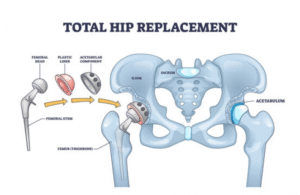
A Total Hip Replacement is a surgical procedure in which the damaged parts of the hip joint are removed and replaced with artificial components. This generally involves replacing the femoral head and the damaged surface of the hip socket.
When both hips require replacement, surgery can be performed in two ways:
- Simultaneous bilateral hip replacement: Both hips are replaced during the same operation.
- Staged bilateral hip replacement: One hip is replaced first, followed by the other after an appropriate recovery period.
Both approaches can be effective, but the best choice depends on the individual patient’s medical circumstances.
Can Both Hips Really Be Replaced at Once?
Yes, both hips can be replaced during a single operation in appropriately selected patients. Simultaneous bilateral hip replacement may offer the advantage of completing both procedures during one hospital admission and one rehabilitation period.
However, replacing two hips at once is a more demanding procedure than replacing a single hip. The operation can involve a longer surgical and anaesthetic time and may result in greater blood loss. Therefore, careful patient selection is extremely important.
Your surgeon may recommend staged surgery if having both hips replaced together could increase your individual risks or make rehabilitation unnecessarily difficult.
Who May Be Suitable for Simultaneous Hip Replacement?
There is no single age or health profile that automatically makes someone suitable or unsuitable. Your orthopaedic surgeon will consider several factors, including:
1. Overall Health
Patients need to be medically fit enough to tolerate a longer operation and recovery. Existing heart, lung, blood or other significant medical conditions may influence the decision.
2. Severity of Hip Problems
If both hips have advanced arthritis or another condition causing significant pain and disability, replacing both joints may be considered.
3. Physical Fitness
Good general fitness can be helpful when recovering from bilateral surgery. Your ability to participate in physiotherapy and mobility exercises will also be assessed.
4. Bone and Joint Health
X-rays and other investigations can help your surgeon understand the extent of joint damage and determine the most appropriate surgical approach.
5. Personal Circumstances
Your home environment, support from family, work requirements and rehabilitation expectations may also influence whether simultaneous or staged surgery is preferable.
What Are the Advantages of Doing Both Hips at Once?

For a carefully selected patient, simultaneous bilateral hip replacement can provide several potential benefits.
One operation: Both problematic joints are treated during one surgical episode.
One hospital stay: Instead of having two separate admissions, patients may complete treatment in one admission, depending on their clinical progress.
One rehabilitation period: Rehabilitation can address both hips together rather than requiring two separate recovery periods.
Earlier treatment of both hips: Patients do not have to wait for the first hip to recover before addressing the second one.
However, these potential benefits must always be balanced against the increased demands of bilateral surgery.
What About Recovery After Bilateral Hip Replacement?
Recovery varies from person to person. Having both hips treated together can make the early rehabilitation period more challenging because both sides have undergone surgery.
Physiotherapy and gradual mobilisation are important parts of recovery. Your healthcare team will provide individual guidance regarding walking, exercises, wound care, medication and returning to normal activities.
At the Cheshire Hip & Knee Clinic, Mr. Nikhil Pradhan has a specialist interest in hip and knee surgery, including minimally invasive total hip replacement.
Patients should follow their surgeon’s rehabilitation instructions carefully and avoid trying to accelerate recovery without professional advice.
Simultaneous vs Staged Hip Replacement: Which Is Better?
There is no universally better option. The right approach depends on the patient’s individual circumstances.
Simultaneous surgery may be considered when:
- Both hips require replacement.
- The patient is medically fit.
- The patient can tolerate a longer operation.
- Rehabilitation of both hips together is considered appropriate.
Staged surgery may be preferred when:
- The patient has medical conditions that increase surgical risk.
- Recovery from bilateral surgery may be difficult.
- One hip is significantly worse than the other.
- The surgeon believes separate procedures provide a safer treatment pathway.
Some NHS commissioning guidance does not routinely fund simultaneous hip replacement, illustrating why availability and eligibility can depend on individual circumstances and local healthcare pathways.
Choosing the Right Hip Replacement Surgeon in Cheshire
Choosing an experienced specialist is an important part of planning hip replacement surgery. A Best Hip Replacement surgeon should provide a thorough assessment rather than recommending the same procedure for every patient.
Mr. Nikhil Pradhan is a Consultant Orthopaedic Surgeon in Cheshire with specialist interests in hip and knee surgery and lower-limb arthroplasty. His clinic provides treatment for hip replacement and related hip and knee conditions.
If you are searching for a knee replacement clinic as well as specialist hip care in Cheshire, a combined hip and knee service can provide convenient access to assessment and treatment for multiple joint conditions.
Conclusion
So, can both hips be replaced at once? Yes, simultaneous bilateral Total Hip Replacement is possible for carefully selected patients. It can reduce the need for two separate operations and rehabilitation periods, but it also places greater demands on the patient and requires careful medical assessment.
If pain in both hips is affecting your mobility and quality of life, speak with an experienced orthopaedic surgeon in Cheshire. A personalised assessment can help determine whether simultaneous bilateral hip replacement or staged surgery is the safest and most appropriate choice for you.
Frequently Asked Questions
- Can both hips be replaced during the same operation?
Yes. Both hips can be replaced during one surgical procedure, known as simultaneous bilateral Total Hip Replacement. However, it is only appropriate for selected patients after a thorough medical assessment. - Is bilateral hip replacement more difficult than single hip replacement?
It can be more demanding because both hips are operated on during the same surgical episode. The operation may involve greater blood loss and a more challenging early recovery, so careful patient selection is important. - What is Total Hip Replacement?
Total Hip Replacement involves replacing the damaged femoral head and hip socket surfaces with artificial components. It is commonly performed for severe arthritis and other conditions that cause significant hip pain and loss of function. - How do I know whether I am suitable for bilateral hip replacement?
Your surgeon will assess your general health, fitness, hip condition, medical history, investigations and ability to participate in rehabilitation. The decision should always be personalised. - Where can I consult a hip replacement specialist in Cheshire?
Patients in Cheshire can seek an assessment from Mr. Nikhil Pradhan, a Consultant Orthopaedic Surgeon specialising in hip and knee surgery. The Cheshire Hip & Knee Clinic provides specialist assessment and treatment for hip and knee conditions.